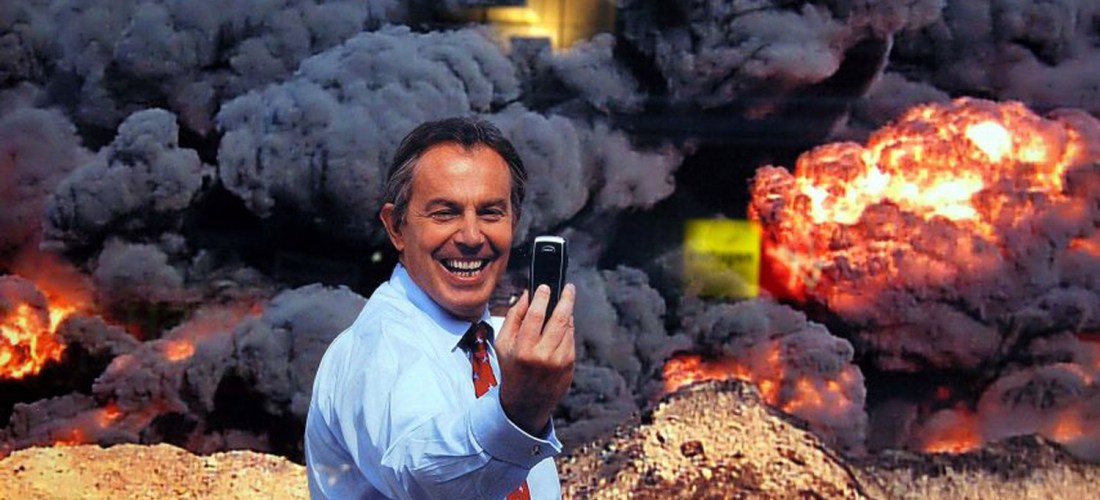
Is Tony Blair to blame for the Iraq War?

Opinion Pieces


Just a little intro…

Juggernaut is a strong adjective to use for most things let alone a politician, so when I use it to describe Tony Blair please understand how truly exceptional this guy is- note that exceptional doesn’t imply that he was a good guy or a prick, that part is up to you to decide for yourselves. One thing that is fact though is the impact that the Iraq war had on not only his career and the public perception of him but the whole UK and its future.

I’m not ashamed to proclaim he is an idol of mine, I mean just look at this stuff;

  • Manages to wipe the floor with a dominant Conservative party
  • A whole class of social reforms, infrastructure investment and education reforms
  • The big one for me- puts a stop to genocide in Kosovo

For a long while I tried to detach him from guilt in the Iraq war and blamed vested American interests, however I really am starting to question him these days. How stupid do you have to be to be friends with George Bush? Let alone follow him into a random war.

But lets not bore you with that. The following essay tries to find out whether realist interests were the motive for the Iraq war, or whether the personality of a leader (in this case Tony Blair) can be so strong and powerful that a war can be started at the whim of their finger. A few people sometimes complain that I never include sources in this blog and I was going to tell them to fuck off but maybe a better compromise would be to include some sauces this time (sorry), congratulations geeks- you win this round.

I hope you enjoy it, make yourself a coffee or ice tea or something beforehand because it’s quite a long read but who knows maybe its worth it- it could change your life and all that philosophical shit. Message me for any thoughts or good discussions, I love conversing (if you’re annoying don’t bother)

Have fun
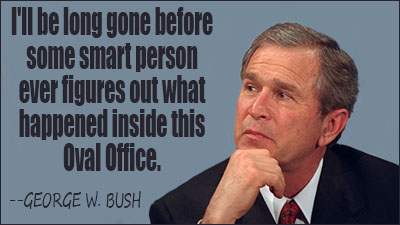
george_w_bush_quote_3

Evaluations of the Iraq War and its merits have been bleak to say the least after its conclusion in 2011. Although there exists particular interest in exploring the legality of such a conflict, this paper will not delve into that minefield. Instead the process and motivations driving the decision to wage war against the sovereign state of Iraq shall be analysed. Significant emphasis is now placed on the belief that Iraq was a culmination in securing cold hard realist interests mainly by America. However, this argument does not satisfy my cravings for unquestionable closure, therefore the psychological aspect of key decision makers needs to be inspected. With Iraq there were a lot of public figures, so for the sake of being concise I will concentrate mainly on Tony Blair, whilst also acknowledging the entirely valid explanations realism provides for the conflict. This question is important for the field of foreign policy due to the ramifications it poses, is the practice of state’s foreign policy a result of consensus in a homogenous state or actually can it be hijacked by an opinionated and powerful individual.


The Return of Realism

As known, the theory of realism continuously provides us with an explanation for global events throughout history based on its tenets of groupism, egoism and the central importance of power. When George Bush defeated Al Gore to bring the Republicans to the helm of US politics there was clearly going to be a shift in approach. The new president had set the tone that the presidency would be “a clear eyed realist” institution (Bush, 1999). This proclamation would continue to set the approach and stance that the new administration would take on foreign policy matters in Iraq. Later on in 2002 in the run up to the war the hints of intervention and the importance of realist thinking would be ushered by the president; “It’s important to have people in the Senate who are clear-eyed realists. It’s important to have people who see the world the way it is, not the way we hope it is, and the world is a dangerous place, particularly with people like Saddam Hussein in power (Bush, Iraq Must Disarm Says President in South Dakota Speech, 2002). This shows us the pre-invasion mood surrounding the top brass at the White House was very interventionist in the first place. Upon further exploration, the realism in the White House becomes much clearer as important members of the administration team like Dick Cheney and Condoleezza Rice are renowned advocates of realist politics (Boot, 2002, p. 23).

Exploring the Realist In-Group

Before exploring who constituted the inner group in the Bush administration there needs to be some context. In 1997 whilst the Democrats were still in power under the leadership of President Clinton a group of republicans gave birth to the “Project for the New American Century”. What this essentially was is a group of realists whose goals would be identical to the ones the Bush administration delivered on. They essentially promoted “American values” as if it was an exportable commodity (Boot, 2002, p. 12). The spread of Americanism throughout the world coupled with military strength would ensure the country the centre stage as the new hegemon. Of course this newfound ideology would require high defence spending, and more importantly the will to challenge regimes that posed a threat and deviated from the American way of thinking and against her interests (Boot, 2002, p. 25).

Now a realist undertone for US foreign policy is not something that came about exclusively with the Bush administration; in the 1980’s President Reagan also supported interventionism by the US abroad. The desire to project military power abroad became a key policy objective at the time, even in the midst of heightened Cold War tensions with the USSR (Agnew, 2003, p. 873). We can see then that Bush brought back this hard-nosed approach to international relations, but it was definitely not a novel approach- it had been done before, and it’s seeds were certainly sown before he came to power.

Foreign policy strategy was to be eternally changed by the events of the twin-tower bombings in September 2001. The opportunity arose for Bush to implement the far-reaching global interventionism that his inner circle believed in before they came to power. The fact with waging wars is that there has to be the right mood amongst the people, there has to be a consensus amongst them that this is the right thing and only option available. This view particularly hindered Blair in the UK where there was very strong opposition to the war, including the march of a million civilians (Naughtie, 2004, p. 134). The general feeling in America was akin to that after the Pearl Harbour attacks; the president could advocate a form of defensive realism, as means of protection- attack is the best form of defence. This was strange when compared to Bosnia a few years back, moves to go in there were blocked by Congress and people were reluctant to commit, yet after 911 the President was given a blank card essentially to do whatever it took (Boyle, 2004, p. 91).

The attacks on New York from a realist perspective were useful. They certainly created the domestic fervour at home to make the expansion of Americanism possible. The post-911 world has certainly allowed the USA to furthermore spread its values and ideas to a world, which in turn is now micromanaged under a unipolar superpower. Although some may critique this as a promotion of conspiracy theories, the fact that American interests have been served due to the war on terror is undeniable.

No more Communism? Great! We can do whatever tf we want now…

The balance of power created under the bi-polarity of the Cold War obviously ended when the Soviet Union demised. It could be said that the US did not take advantage of its status as sole superpower; maybe it did not know how to react after being constrained for so long (Agnew, 2003, p. 874). Yet the Bush administration arguably finally took advantage of the lack of buffer and committed to an offensive form of realism in the post-911 era (Agnew, 2003, p. 876).  The existence of the USSR prevented the USA from engaging itself abroad in military interventions due to the complicated nature whereby allies in Europe relied on the US for protection essentially and any negative involvement would isolate them (Agnew, 2003, p. 873).

The shift in approach to be more assertive saw signs even in 1992; just after the collapse of the Eastern Bloc, there was apprehension that the US had to act fairly quickly in order to secure its new found superiority before it was challenged once more, it felt that its time was ticking until a new superpower emerged (New York Times, 1992). ‘‘Our first objective is to prevent the re-emergence of a new rival, either on the territory of the former Soviet Union or elsewhere, that poses a threat . . .. Our strategy must now refocus on precluding the emergence of any potential future global competitor’’ (New York Times, 1992). This infers quite clearly the aim of the United States as a state to secure its position in the world, and to become more secure- therefore taking up the realist position in the post-911 world cannot be attributed solely to the Bush administration but is reminiscent of a classic realist agenda in general. As mentioned previously, the big expansionist drive simply could not happen in the 1990’s due to the fact that the realists were not actually in power but rather the Democrats, and secondly there had not been a large-scale attack on the US in order for the people’s attitudes to be primed.

In summary, 9/11 was the enabler for the realist ambitions the US already had; it allowed the realists within the presidency to capitalise in order to carry out their objectives. These aims centred around two main points. Firstly the lack of a threat from ‘the other’, which used to be the Communists; America used the war on terror to re-impose itself as the unchallenged leader of the ‘free world’. It needed to remind the allies in Europe and the world of its credentials. Secondly the invasion would be a reminder to any potential rebellions against the established international system or American interests- basically if you offend us you will suffer the same fate (Agnew, 2003, p. 876). We can see that the original Afghan war was an act of self-defence, and in the view of international law it was certainly legitimised. The issue arises with the Iraq invasion which nearly ruptured the allies amongst themselves and has led to continued accusations of illegitimacy, yet the realists sent out the clear message that with unrestrained checks on their power they will be acting unilaterally if they have to (Agnew, 2003, p. 877).

Tony Blair and his personality

The declassification of information surrounding Iraq allows us now after it’s official conclusion in 2011, to gain a truer understanding of the buildup to the war. This is even more significant since this exact process of decision-making has been seen in many sectors of opinion as rushed, wrong and even illegal (Kampfner, 2004, p. 4). The personal views of Tony Blair in regards to what British foreign policy should aim to achieve should be assessed. He himself can be quoted as saying “the most pressing foreign policy problem we face is to identify the circumstances in which we should get actively involved in other peoples conflicts” (Blair, 1999). This speech early in his role as prime minister can arguably be seen as him presenting the foreign policy strategy the UK government will employ whilst he is at the helm. The main line of argument for Blair who we have now established an advocate of interventionism; is that the sanctity of state sovereignty is directly dependent on that state’s provision of protection for its people. Once a state decides to go as far as destroying its own population then the grounds for a moral intervention are entirely satisfied. According to Meyer, those in power applied this concept of moral interventionism to the Iraq case of 2003 whole-heartedly in their efforts to legitimize regime change and invasion (Meyer, 2005).

Everyone needs self-belief…except Tony Blair, he has too much already!

Those close to Blair have repeatedly and consistently brought up the fact that Tony Blair has enormous self-belief and trust in his charisma, thus also his ability to persuade others. He was always of the opinion throughout the whole build up to the war that he could turn things in his favour, just by the use of his own persona. He was convinced that he could persuade George Bush to seek approval from the United Nations, get the British parliament to approve his plan and most importantly get the British people convinced that he was telling the truth and such a move was actually needed (Kampfner, 2004). Tony Blair always backs himself even against the odds, believing that he will be the one to persuade the un-persuadable, he would claim “I can get Jacques Chirac to do this’’ or ‘‘leave Putin to me’’ (Kampfner, 2004, p. 127). However, Kampfner does admit that such bold belief by Blair tends to create scenarios of over reaching, where he bites off more than he can chew- suggesting that Iraq was one of these situations, and that Blair did not understand that “the world was more complicated” than he personally thought (Kampfner, 2004, p. 128).

This inability to understand complex matters for what they are, rather than seeing them in stark black and white was also noted by one of Blair’s advisors who commented; “I was staggered at Blair’s . . . inability to engage with the complexities. For him, it seemed to be highly personal: an evil Saddam versus Blair–Bush. He didn’t seem to have a perception of Iraq as a complex country” (Naughtie, 2004, p. 62). Naughtie also highlights Blair as someone who had a weird craving for informality in politics, a sort of make it up as you go along approach to facts and figures, and finally a tendency to block out the weighing up of evidence that he personally didn’t agree with (Naughtie, 2004, pp. 14,17).

From our perspective, this certainly does go far to an extent in explaining why Blair decided to view Iraqi WMD intelligence as unchallengeable, when in fact the independent Butler report suggested it to be sporadic and patchy in its evidence. If we can lay the reason for going to war on reports that Iraq possessed special weapons, then Blair can be found to be a catalyst for ‘strengthening’ it beyond doubt. He used his power to manipulate the evidence to suit his needs, without Blair it can be argued that the intelligence would have prevented the invasion of Iraq. He claimed ‘‘what I believe the assessed intelligence has established beyond doubt is that Saddam has continued to produce chemical and biological weapons, that he continues in his efforts to develop nuclear weapons, and that he has been able to extend the range of his ballistic missile program . . . I am in no doubt that the threat is serious and current, that he has made progress on WMD, and that he has to be stopped’’ (Blair, Foreword to Iraq’s Weapons of Mass Destruction: The Assessment of the British Government, 2003). He used his agenda of wanting the war, in the process tampering in a sense with evidence thus can be held responsible for going to war.

Tony Blair’s interventionist belief perhaps was driven by his desire to maintain the special relationship with America. Many at the time felt that Blair was almost like the puppy of George Bush, and that he should actually abandon this loyalty, yet his response to these calls were as follows; ‘‘I will tell you that we must stand close to America. If we don’t, we will lose our influence to shape what they do’’ (Seldon , 2004, p. 574). This obsession to shape American policy blind sighted Blair in a way, his self-belief that he could achieve something like that actually wasn’t achieved, and instead critics state that all this was in vain. He could not persuade Bush and the Americans in any way, shape or form. This all ties back to the change in approach in regards to the conduct of foreign policy under the premiership of Tony Blair. A more personal approach was taken to the way foreign affairs were conducted, personalising it to an extent and actually bringing it into the domain of prime ministerial responsibility rather than a separate department under the foreign secretaries prerogative. His domination of the foreign department was so total that a former advisor described it as “Napoleonic” (Hennessey, 2001, p. 478). The bypassing of Jack Straw who was foreign secretary at the time was admitted by himself too; ‘‘There is a recognition that if there is an international crisis on this scale the head of the government will be leading the national effort, and he had sure better be’’ (Straw, 2001, p. 1). Although Jack Straw does not explicitly shout about Blair meddling in his affairs, we can sense the general idea of what he is saying. We can infer from this statement that Blair led the foreign policy charge personally and thus foreign actions like Iraq would be due to decisions made by him.

The role played by those in the so called ‘inner circle’ 

I will be looking at the role of Blair’s persona, in particular his preference for conducting policy decisions and formulation within an in-group of close advisors instead of open deliberation with a variance in opinion such as those in the cabinet (Guha, 2003). Now aside from the aforementioned issue of there being little in the way of challenges to his opinion and real reflection, this also creates a situation whereby cabinet is used as a mechanism to simply validate plans which had already been agreed in advance. This created a very informal style of governorship, and left a disarrayed cabinet starved of information, they would end up finding things out through mainstream media before they heard from within (Naughtie, 2004, p. 45). This all then just infers what we already suspected, that the decisions taken were led by Tony Blair as a personality rather than the deliberations of a cabinet, so the responsibility for them should be left at his feet.

The importance that Tony Blair had in the Iraq war cannot be argued with, in terms of how he drove forward UK foreign policy decision making at the time. Blair reigned supreme in regards to having unchallenged control over the affairs of the UK in this time period; this made it much easier for him to spread the ideals he held dear through interventions in the world. Saddam Hussein was not challenged as vehemently before the arrival of Blair onto the scene, although he was denounced there wasn’t a pressing need to intervene. However Tony Blair made it a foreign policy priority, seeing himself as a global policeman. The fact that he had all of the power we talked about meant that he is personally responsible for the Iraq situation. Normally you could also attribute blame to the government as a whole, but the evidence really does support the view that he ran a crony system whereby the cabinet were not involved in debate but merely the validation of pre-prepared policy ideas.  During his tenure the foreign policy lost it’s purpose under the jack-of-all-trades Blair.

Lets wrap things up here because I’m getting tired and want to go to the café

To conclude on the question of essentially what led to the Iraq war we can see two clear strands of thought. The first focuses on the classic tenets of realism, mainly being about states acting for accumulation of power and the assumption that these states are single-mindedly homogenous entities. On the other hand, the role of leader psychology can be seen as also having an effect. The contribution that Tony Blair made to the Iraq war does seem very important, he was the main and unquestioned driver of UK foreign policy at the time; and the fact that the prime-minister post with a strong majority is a virtual dictatorship also supports the point. The realist argument I feel falls down on cold hard facts, its biggest flaw is the assumption it has of states themselves, states are not homogenous but rather an aggregate of individuals with different ideals. In addition to this, as mentioned early on in the paper, we did see murmurings after the end of the Cold War that expansionism should take centre stage, yet it was only after Bush came to power that this actually happened. If realism is right, and states are always out there waiting for their rivals to slip so they can accumulate more power then the Iraq invasion would have happened ten years before it did. The role of personality plays the biggest role, and it certainly did in Iraq with Blair. We have the assumption that one individual could be too small to affect the policy of their massive states, yet the evidence proves that it only took two individuals to send us into a war we now realise we didn’t want.

Top Tips from Bazi: Tony Blair, if you’re reading this here is a tip for next time…

……if you want to start a war with your mates then at least give us accurate reasons BEFOREHAND and stick to your reasoning. Don’t go in on the pretences of there being Weapons of Mass Destruction in Iraq just because scaring the British brings them on board better than other reasons for supporting your desire for war. After you realised there weren’t any weapons you tried to frame Iraq as a Western humanitarian intervention. I can accept humanitarian intervention wars to save people, but you have to give that reason beforehand not after.

Cheers for taking the time to read, I’d love to hear your thoughts


Go back

Your message has been sent

Warning
Warning
Warning
Warning

Warning.

Bibliography

Agnew, J. (2003). American Hegemony into American Empire? Lessons from the Invasion of Iraq. Antipode (35), 871-885.

Bush, G. (1999, November 21). A Distinct American Internationalism . A Distinct American Internationalism . Simi Valley, California, USA: Reagan National Library .

Bush, G. (2002, November 05). Iraq Must Disarm Says President in South Dakota Speech. Speech on Iraq, given to Congress . South Dakota, n/a, USA: White House Press release.

Blair, T. (1999, April 22). Doctrine of the International Community. Speech to the Economic Club of Chicago . Chicago, USA: Economic Club of Chicago .

Blair, T. (2003). Foreword to Iraq’s Weapons of Mass Destruction: The Assessment of the British Government. London: Stationary Office .

Boyle, M. (2004). Utopianism and the Bush Foreign Policy. Cambridge Review of International Affairs (71), 81-103.

Boot, M. (2002). The Savage Wars of Peace: Small Wars and the Rise of American Power. New York: Basic Books.

Guha, K. (2003). Testing Times for Prime Minister’s Inner Circle. London: Financial Times.

Hennessey, P. (2001). The Prime Minister: The Office and its Holders Since 1945. London: Palgrave.

Kampfner, J. (2004). Blair’s War. London: Simon & Schuster .

Naughtie, J. (2004). The Accidental American: Tony Blair and the Presidency . New York: Public Affairs .

New York Times. (1992, March 8). Prevent the Re-Emergence of a New Rival. Excerpts from Pentagon’s Plan . New York, NY State, US: New York Times .

Meyer, C. (2005). Playing to the Crowd. London: The Guaridan.

Seldon , A. (2004). Blair. London: Free Press.

Straw, J. (2001, November 6). Interview with the Foreign Secretary . (B. Webster, R. Webster, & P. Webster, Interviewers) The Times. London.
UK General Election: What just happened?

Opinion Pieces

The best part of election day has to no doubt be the realisation that there will no longer be any more campaigning and television programming can finally return to normal (thank God for Eastenders). How this election came about in the first place was quite weird, but also understandable. The majority of 17 seats the Conservatives had in parliament meant a lot of power lay in the hands of backbench MPs not in government; if they wanted to rebel then they could. Like most interest driven politicians these, backbenchers did cause trouble; those who had wanted more say on Brexit slowly dragged government plans down, so something had to be done.

Consequently, at this time the high poll ratings for Theresa May were tempting her into staging an election, however the upcoming Brexit negotiations surely meant she should forget it and get on with the job? Nope, our old friends in government decide this is the perfect time to piss us off by forcing us to vote and thus further delay the start of negotiations. Let us not forget that most trade deals take 10years+ to be negotiated- we only have two for ours with the EU, well actually now we have less than two because people cannot actually be bothered to start the negotiations. I don’t blame her for staging an election because I can understand that everything pointed towards a Tory landslide but sometimes you have to put national interest ahead of political point scoring; in 2010 Nick Clegg did just that, he could have refused to prop up a government and thus not risk anything but he chose to create relative stability in a time of recession and global financial crisis- even if the tuition fee fiasco still hit.

I should move on and assess the many reasons I think can explain the hung parliament and why the Conservatives have lost the most in this election, notice how I don’t say Labour have won. There seems to be this over joyous perception amongst people post-election that somehow Corbyn has won a landslide and all is rosy. We can go through the different election factors in a minute, but Labour are still the second party and have many less seats, to be a majority government they have a lot to improve on. The reason we’re seeing a ‘de-facto Labour win is because they did okay when actually everyone expected them to be run over’ – sorry but gaining a similar amount of support to what Gordon Brown managed in 2010 is nothing to celebrate.

UKIP Vote

Yes! My favourite topic re-emerges again. There is nothing more that I love in the world than working class people voting for a party that does not actually help them in any way, shape or form. Jokes aside, everyone has their reasons for voting UKIP be it based on inherent racism or as a protest against traditional political parties. The Brexit vote which was won by the Leave camp in a way meant that although UKIP had won then, they ended up losing in the recent election this time round. The relevance of the party diminished for two reasons. First, the whole DNA of UKIP has been about separation from the EU since its inception, and now Brexit has essentially made them a pointless proposition altogether. Second, the Conservative promises that free movement of people was the ultimate red line in negotiations thus signalling towards a ‘hard Brexit’ meant that Leave voters did not feel as compelled to continue voting for the extreme right party.

So what happens to the millions of voters they had in 2015? Well, if you asked a politics professor they would probably have given you the answer that most UKIP voters were right wingers and thus would return to the Conservative party, and this idea does essentially make sense. Yet, Brexit was weird, a lot of traditional Labour supporters had actually been both Leave and UKIP voters. We see then a splitting of the previous UKIP vote amongst Labour and the Conservative parties at this election; this was though a disproportionate distribution whereby Labour got more of the spoils than the Tories- further increasing their vote share in crucial constituencies.

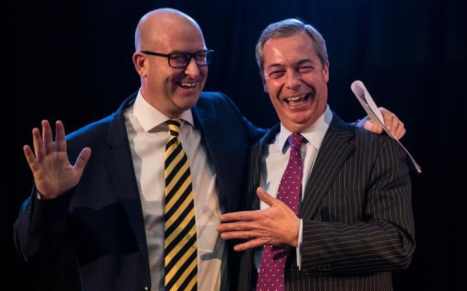
As a side note though, I stayed up all night watching the election coverage on BBC One. At one point around 3am or so, Nigel Farage comes on like a shrivelled potato and explains how he’ll ‘be forced’ to come back into frontline politics. I don’t care about this guy any more, but the fact that he keeps fake resigning and then comes back is the most annoying shit ever. Don’t sit there and try to forward this false ‘national saviour’ narrative, when you’re gone I want you to shut up and actually go. It also says a lot how UKIP is a personal party in that it cannot survive without the aura of its leader, I admit he is charismatic and a good leader however but come on UKIP get your act together and get a grip. Grow up.

JS114774077_Rex-Features_UKIP-Leadership-Announcement-London-UK-28-Nov-2016-large_trans_NvBQzQNjv4BqqVzuuqpFlyLIwiB6NTmJwZ6pESDpte5zCpzUUpXwQ_0

SNP Lose

I don’t want to go too deep into this, to be perfectly honest I do not know much about Scottish politics so would feel like I’m giving a false impression of expertise. The SNP in a similar way to UKIP won their appeal off the back of a rise in national sentiment because of the 2013 vote for Scottish independence. Although eventually Scotland voted to stay in the union, the SNP completely wiped out everyone in Scotland and returned as the third biggest party in Westminster. The huge support galvanised key figures like Alex Salmond and Nicola Sturgeon and gave them the mandate to start demanding a second referendum on independence.

The mistake probably lies here, in the SNP’s ignorance of the unionist voters. Yes of course they had the relevant mandate for their demands from the election landslide in 2015, but a lot of voters who opted to remain in the union in 2013 probably felt abandoned and unheard as the SNP drove on for an indyref2. Scotland of course was a Labour fortress previously and thus in this election a lot of those disillusioned with the SNP went back the newly left-wing Labour which had retouched its socialist values.

What confuses me though is why the Tories did well in Scotland, a possible explanation could be the ‘left vote’ was split between multiple parties and thus it allowed the Tories to sneak through. Still it perplexes me, I’d love to hear your opinions on this too.

1455483468-0

Labour Youth Mobilisation

 I’ve always been a democrat first and foremost and confidence in the democratic system has waned in the last few decades. We’ve had a growing trend of people claiming that ‘voting doesn’t matter’ or ‘nothing will ever change’. Especially among young people this seemed to be the case. What this does is allow other age groups to essentially dictate votes and then also policy. Youth voters cannot sit there complaining that politicians are screwing them over when their age group turnout is so historically low. Older citizens consistently go out and vote, so naturally parties will cater their manifesto ideas for them to win these voters over- it is not rocket science. If you want politics to cater to your needs, then worthwhile participation is key.

Along came the Brexit vote and once again it emerged that the UK could have remained in the EU if more IN leaning young voters had bothered to go and vote. What we saw was not an acceptance of the vote, but anger directed towards the older generation for voting the way they did, and also an annoyance with the system because it would actually for once deliver what the country had voted for and leave the EU. For me voting is second nature and I don’t have to be convinced, but I’ve been sitting wondering how other young people can get out of this hopeless rut and get out there, a little inspiration it seems it just what they needed to push on.

The parliamentary Labour party were completely against Jeremy Corbyn, they had very strong doubts in his leadership capabilities yet even after Brexit the party members gave him an even larger mandate to lead with. Throughout the election we saw the Conservatives running a very personalised campaign centred around the perceived message that Theresa May was a strong and stable leader, out of choice they strategised on this and hoped that the public would see Corbyn as weak. Labour also to some degree ran a personal campaign whereby only Jeremy and a few close figures featured prominently- yet they were forced into this by the rest of the party not wanting to align themselves closely because the pre-election polls did not look good. Jeremy was running in minus figures nationally and Labour expected heavy losses, these MPs hoped that any association to him could be avoided and they could keep their seats. In the end of course this all proved to be wrong, and actually a large proportion of them should get on national television and apologise to him personally for their cowardice and self-interest seeking un-loyal behaviour.

Corbyn managed to prove so many people wrong, it turns out he has a huge ability to campaign, as the election grew closer he was blooming; people started understanding him as a man of principle and someone that inspired them with hope rather than the negative campaign the Tories were running- just today I saw a figure claiming the Tories spent over £1m of funds on anti-Corbyn advertising, yet it clearly did not work well enough. The youth in particular for the first time in a generation felt inspired to vote rather than forced to. A large part of this has to be down to the way Jeremy presented himself as a man of his word, his voting record through the years as an MP has been led by principles first- something never seen before in previous career politicians.

The power of the manifesto though cannot be discounted either. The Conservative manifesto it has emerged was designed by a close knit team of close Tory advisers without much input from anybody else. It did not have as many groundbreaking ideas as the Labour manifesto, even if theirs was actually more of an idealistic wish list. The Labour manifesto can be argued as unrealistic and the way in which they would pay for their promises was brought into disrepute- but at least they offered something for everyone. Labour won votes from all spectrums, the previously Tory older generation started to warm to a Labour party promising to protect their un means-tested winter fuel allowance, and also the triple lock for pensions.

Young-Voters1

Conservatives were bad

Where Labour put an arm out to the older generation the Tories did as much as they could to alienate them. They didn’t promise a triple lock, they considered means testing for the fuel allowance (which personally I am actually in favour of, under the current system even millionaire retirees can still claim their winter fuel allowance the same way that those struggling to heat their homes can).

The worst Tory blunder though came under their promised reforms for social care. What came to be known as a ‘dementia tax’ forced Theresa May to make a U-turn and thus harm any perception that she was a strong leader. Asking a retired population who feel they have worked hard all their lives to then give up their life capital and only be allowed to keep £100,000 meant their loyalties to the Tories stopped. I honestly couldn’t believe my eyes when I saw the social policy coming through, I knew something was wrong and I was right; the lack of proper party scrutiny hadn’t corrected this policy and stopped it from going into the manifesto due to the lack of trust the prime-minister had in the party mechanisms and the over-reliance on a few close advisers she had had since her days in the home office.

You will remember me talking about the Tories leading a highly personalised campaign because of the belief that people would be put off by Jeremy Corbyn’s perceived lack of leadership authority and see Theresa as more ‘prime ministerial’. Upon the start of the respective campaigns this definitely was true as pointed out in the polls, he ran in negative figures and she was miles ahead in percentage points. Yet, it became clear as the weeks went by that Jeremy was taking to campaigning like a fish to water, he literally blew apart every assumption we had made, the people were warming to him and his principles. How far this rise in popularity was just due to him can be debated furthermore, was he really good or was she just shit? The answer is probably a bit of both actually, we definitely shouldn’t underestimate how bad she became though. Theresa May started to sound like a robot, with her psychotic ‘strong and stable’ soundbites that the rest of the party had to repeat like an army of drones. She wasn’t meeting real people only stop offs surrounded by party supporters faking the extent of ‘crowds’. The worst though came when she decided not to join the leadership debates, yes of course you can argue every other person in her position would have shied away too, Cameron for example didn’t go on direct head to head debated in 2015 either, but his popularity wasn’t waning like hers, she desperately needed to rekindle a deeper connection with the electorate- and instead of this her no-show just made the divide bigger as we started to feel offended by her unwillingness to respect us and continued behaviour where she took votes for granted.

Another thing taken for granted was the UKIP vote, the Tories like everyone else believed most UKIP voters were former Tories who were a bit fed up but now we were going to have a hard Brexit they would surely come back like chickens to roost. To be fair the Tories since Brexit have been stuck between a rock and hard place. They have had to give us Brexit and so forced into alienating themselves from the 48% remain voters. Labour and other parties on the other hand could play the field. In the case of Labour, in the manifesto they also made it clear that Brexit would mean an end to uncontrolled immigration (same as the Tories) but in terms of rhetoric they had a free hand to go and convince the remain voters that they were somehow different from the un-compassionate Tory monsters out to get the hardest divorce from the EU available. Through force and choice, I don’t think I remember a political campaign as bad as this for the Tories, and if Labour had had an even more likeable leader who could reach out to Tory voters then we could have been looking at a spectacular jugular attack and leftist landslide. As the old saying goes though; fuck knows.

Theresa-May

What now?

Now you’re reading this and expecting some sort of clarity from a guy who has become so shit at predictions that he nearly had to close the blog down a few months ago for various reasons, but I don’t want to let you down so I’ll try my best. You know what I might actually use bullet points here to try and trick your brain into thinking there isn’t going to be a lot of text, when actually there is.

  • We have a hostage situation essentially, not like the ones in films where fit girls are taken by an evil anti-hero and Superman has to save these damsels in distress in an overcomplicated set of CGI filled scenes. What we actually have is a prime-minister sitting in number 10 with a minority government. We’ll go onto the DUP problem later. Remainers are going over the top right now with their celebrations, they think a sitting duck premier will mean that we might not have Brexit at all. Yes, overriding a democratic decision made by the people will definitely increase confidence in the democratic process, I’m sure this would help the average man think ‘my vote really matters’. Obviously it won’t, stop trying to frustrate something we all voted on and let’s get on with it and make the best of it. May might be more prone to working together with other parties in Westminster so you could get some of her previous red lines wiped away, immigration was seen as a redline previously and the desire to have access to the free market was secondary but now they might have to be on equal terms. Remember though, she is also now more susceptible to her own backbench MPs too, all it takes is a few of them to not follow the party line and the government is defeated…the government struggled at times last year with a majority of 17, now in a minority government it cannot expect to be stronger and get its way.
  • The Democratic Unionist Party are from Northern Ireland, which of course is a pressure-cooker region ready to explode if you mess around with the various sensitivities too much, you can’t take peace in Northern Ireland as John Major said today “for granted”. Now, traditionally since the Good Friday Agreement which ended the Troubles the UK government has acted as an impartial peace mediator in power sharing coalitions, last year the government broke down there between Sinn Fein and the DUP. If the DUP get into government with the Tories, how can the government then realistically be an impartial power broker? It can’t.
  • This point centres more on who the DUP actually are themselves and what they believe in. The government will be propped up by a group of MPs who have a history of outdated views. I can’t fathom how you can be against abortion in this age and also not believe in climate change, yet I guess that’s religion for ya. It’s not just the weird views they hold though, there is a technical political aspect we can look at too. A deal with this party will of course mean some leverage is given away, they will likely demand more funds for public services in Northern Ireland- leaving other UK regions to wonder why Northern Ireland can bear the brunt of austerity less than the rest of us. If we are truly ‘all in it together’ then why are they getting away scot-free.
  • For now, Brexit doesn’t seem to be under crisis, it is under threat but not as bad as it may seem. The government have insisted talks will be underway next week under the original date so that is good, how successful they’ll be is anyone’s guess though. The bigger problem might happen in the summer when there is a parliamentary recess and everyone shoots off on holiday. No-one has predicted Theresa May to still be prime minister after 6months, and I figure that the party is looking for her to steady the ship and then bring in a new leader. The Tories have always had a knack for not giving a shit and being ruthless, even their ideological wife Margaret Thatcher got the boot this way. This could be the time for Boris Johnson to make his long awaited leadership bid, something he chickened out of after Brexit, but don’t discount other people too- the party is full of talent ready to come to the fore and make a name for themselves.
  • Finally, what happens with Labour? Before the election we had MPs trying to get as much distance as possible between themselves and Jeremy Corbyn for fear that he is a magnet of electorate distrust. Yet now, the election surely has proved otherwise, will they come back and get on board the bandwagon thus giving him a much more united party he can shift around through its various mechanisms. I certainly hope so, even if they do not agree with him I feel that they owe him loyalty to some extent for being a catalyst in them keeping their seats and even winning new ones. Plus, the last thing Labour can afford to do is start more infighting whilst the Tories are such an easy target- if that is they have plans to get into government.
  • I’ve fallen in love. Seeing so many young people on social media getting involved in politics has been a breath of fresh air, even though some of you have been pissing me off with your partisan views and the way you make politics personal. Stop attacking people personally all the time online, whether they’re Tory, Labour or whatever else, by all means attack their opinions but not their person. This point proves a shift, in the past the old mantra dictated something like ‘whoever had the support of The Sun would win the election’, traditionally the Tories had it but Tony Blair bucked the trend. Anyway, I’ve always been a firm believer in this, due to how impressionable Sun readers seem to be in following policies designed to fuck them up. Their problem, not mine. But anyway, this election has for the first time seen the growth in alternative media as a medium for informatics, the influence of traditional media is dropping, people no longer care about the headlines, and instead they’re going online to source their own information. We have to be careful with unregulated media, after all the spread of ‘fake news’ and unsubstantiated claims can go like wildfire but its looking positive at last. Rupert Murdoch you better start running.

Okay that’s where we stand right now then, British politics is filled with more drama than an episode of Big Brother but it could be a good thing in the long term. I’ll try and correct any grammar mistakes throughout but if any get through then don’t hate me, hope you enjoyed the read even if was a bit long but I’ve tried to make you laugh a little at least so it is worth it.

Yours truly,

G


Thoughts on BREXIT and possible reasons

Opinion Pieces

FT_Brexit_01

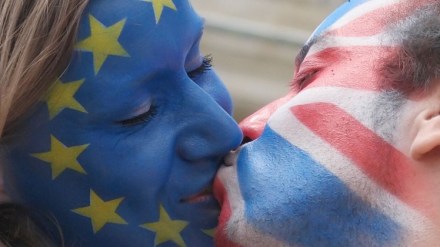
When looking back it could be said that 2004 represents a hybridity of emotions depending on who is asked. On one hand the expansionist project undertaken then to bring Eastern Europe in from the cold can be seen as positive for the whole European project and needed. However, for certain members especially in Western Europe there is large consensus that enlargement had been rushed and so the westward movement of people is actually key to the growing euro-scepticism which drove Britain into voting ‘no’ on the 23rd June. That is the main argument put forward by ‘leave’ voters, but there are other possible explanations too that deserve their limelight such as the desire for concrete national sovereignty. The rise of the ‘English feeling’ is another factor among many that would seem to contribute to the final leave result. This exact fact that there are so many explanations for Brexit means that the truth is complicated and we must accept a coalition of reasons; primary among which the issue of immigration control leads them all.


Instead of referring to immigration as a restrictive issue related just to the movement of people, I am instead going to reconceptualise its meaning to include the criticism of key European decision-making; mostly in regards to then causing mass immigration Westward. The fifth enlargement phase for me was a catastrophic mistake for European integrational prospects. The EU felt the need to take in a large amount of countries for a range of reasons, most of which were driven with the promise of increased economic benefits now it could exploit Eastern markets and also increase the total consumer market size. There were other reasons of course too such as strategic political positioning; failing to take the members in would leave them vulnerable to Russian influence and thus lose European legitimacy. The move in hindsight proved to be destructive actually, it was expected that there would be negatives associated with the intake. The East was underdeveloped and just assessing the cases of Bulgaria and Romania we can see this illustrated- they were meant to be a part of the original phase but actually had to join in 2007.


Communism in Eastern Europe was a situation essentially run as a satellite of USSR influence, meaning that economies were state planned. By the time communism had run its course the economies and more importantly the workers in these countries were very poor in relative terms to the West. The 15 years after democratisation is a questionably low amount of time for them to manage economic growth, and to actually lift their people out of poor finances. What can be taken from this is the lopsided nature of the EU organisation once these new members actually joined, you had the divided Germany scenario but in a scaled up version. The West through budgetary assistance had the opportunity to build up the East; of course they got benefits too otherwise the incentive to help would not entice. Yet in return the mass migration we saw starting from 2004 mainly constituted of poor, working class people who would work low skilled jobs. The economics involved when introducing a large amount of supply into any scenario dictates lowering of cost and thus we had the real wage deflation that first led to immigration being spoken out against in addition to the rise in competition for employment.


Almost as soon as the members joined the European Union there has been a growth in Euroscepticism in the United Kingdom, of course this was less evident when economic growth could maintain it. However once the crisis of the later years hit, the reality was obvious that immigration would rise to the surface one more. The readiness of political parties to acknowledge this and try to use it to their advantage is enabling to the argument. The David Cameron pledge to keep net migration lower than 100,000 per annum may have bought him some time and a higher vote share but it was a completely unplanned promise. The principles of free movement severely restricted the governments hand when it came to delivering the necessary reductions in order to achieve those figures; and this even more stark when we realise that the majority of migration was from within the EU as a cause of the enlargement policy.


The actual referendum though as mentioned earlier was fought essentially on two issues, immigration which was just discussed and also the question of sovereignty- exerting British control for UK issues. The poll taken after the referendum by Lord Ashcroft gives the desire to control immigration as the second most popular reason for voting leave. In contrast the most popular is supposedly ‘the sovereignty question’. Doubt should not be cast on the credentials for a public wanting localisation rather than globalisation- a lot of perils in today’s world have been laid at the feet of this new interconnected mind-set ranging from fundamentalist shifts to disenchanted native working classes. I do understand why the poll separates the two reasons for voting leave into separate categories but for me they are almost the same thing. The desire for more control definitely does integrate with a seeming need to control our borders and the amount of people that come in. The answer that could help in this case is that immigration is a specific issue, whereas sovereignty is a catch all solution- if you have more sovereignty then you can control migration easily and thus this is why it came out on top in the poll. The attempt by some leavers in trying to characterise Brexit as anything other than a vote on immigration is wholly wrong, it was certainly presented as a solution to those quails. This is highlighted perfectly in the following YouGov poll where nearly 60% of those asked understood that a full Brexit would reduce migration, even remain campaigners were largely pacified to this claim. The only issue was whether you lay the blame for the shortcomings of this country at the hands of Eastern migrants or rather at a confused elite attacking societal structures like the NHS through systemic underfunding.


English national pride or nationalism if it can even be called that is certainly peculiar. It deserves some passing attention as a final point in assessing Brexit. Whereas classical senses of nationhood creation have always relied on this hypothetical struggle of a common people through the ages, the English identity is much stranger. It builds itself against things rather than on foundations. We can characterise in one word ‘scepticism’ so this entitles it to be a form of Euroscepticism and also as a backlash against other regional nationalisms like the recent resurge in Scotland. The unique setting of England makes it inherently confused; its people stuck between English localism or the more liberally-global identity of ‘Britishness’. The statement that English patriotism has always needed to be embedded in a larger organisation to be effective is definitely true. The so labelled working classes arguably ate up the stream of material the leave campaign spewed in regards to this with the popular ‘get our country back’ slogan driving the campaign forwards, and the data supports this with polls stating that those who identified themselves as English instead of British were more likely to be Eurosceptics and thus vote to leave. The fact that leave won serves to prove the existence of a rise in ‘English nationalism’ before and after the referendum was held.


The concluding points are somewhat indecisive but Brexit was never meant to be a straightforward decision; if it was we would not have received such a close cut difference in vote share between the two campaigns. The interesting aspect for me at least is understanding the demographics of leave voters because it was such a strange coalition of disenfranchised working classes joining forces with their rich landowners in putting a metaphorical middle finger up at the political elite who were accused of being ‘out of touch’. What drives these voting behaviours is yet to be discovered exactly, however it is obvious that the answer resides simply around ‘control’. This word can be used to satisfy all the reason for leaving, first among which is immigration. Immigration is what drove the rise of this Euroscepticism that in turn caused not only English nationalism but actually the real desire to claim back decision-making power. Here we return to the first few points mentioned, the EU and its policies. It is absolutely clear that the EU has been responsible for its own demise. It caused Brexit indirectly, through its rushed enlargement in 2004 it created the pretence that created sufficient reasons for Europhobia and eventually allowed immigration to be the dominating factor for Britain leaving the European Union. As a final point, factually immigration played a massive part in Brexit, but a better planned and more thought out integration policy which did not rush Eastern countries into joining before they were actually ready would have most certainly changed the outcome of this vote.


160621-brexit-kiss

Viewpoint: Banks are Untouchable

Opinion Pieces

Hopefully a lot of you have started to enjoy my postings about various political questions and fields, and I also hope that my attempt to make these issues clearer is actually working, because if its not then there is no point in me sitting here drinking Red Bull typing away on Microsoft Word. A few people have thrown wild accusations at me that the puns I have slipped into previous posts are “not even funny”; I apologise for this and pray that they will get better (unlikely). I want to set something up on here where I pick a random topic that interests me and then give my own personal view on it, hence the name ‘Viewpoint’. If you are here to expect an opinion piece that is backed up by 50 different academic sources then please leave right now, the whole point of this is to give my opinion on things and not to turn into an A-level textbook publisher. Here we go.

What is a banker?

pig

Well, they’re certainly not piggy banks as much as we’d all love them to be. Unfortunately modern bankers have decided to part away with this simple concept of keeping our money safe for when we need to withdraw it. Oh no, they’ve decided to go much further than that. Great.

The Credit Crunch

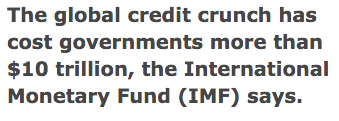
I assume (hope) you all know what the credit crunch was. This crisis is the one of the reasons why your school cant afford to buy the right textbooks, or go on subsidized school trips anymore, and also why you’re generally worse off now than in 2006 (unless you’re lucky enough to be quite rich and have Russian caviar for breakfast everyday). Please do note that this is not an attack on people who are well off, I do genuinely believe in progress and that hard work should pay off. I am just deeply offended at how bankers pulled off the greatest heist in human history. This is literally like The Italian Job, but set in the City of London.

Significance of the London Riots

Yes, the shooting of an unarmed black man by the police set off the London riots, but if we always took things at face value then we would be nothing more than idiots. The real underlying causes of the disorder is widely agreed to be because working classes felt, and still feel stagnation in their lives. They are stuck in this bottomless pit of debt, insecurity and poor quality of life. Fair enough then, the rioting eventually ended; we even had a little pathetic copycat attempt in Chatham, Medway to entertain us. However, what happened after is the real issue that bothers me.

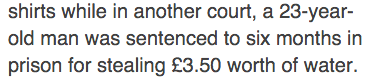
David Cameron and the government clamped down hard on those suspected to be involved, with courts being ordered to work 24hours around the clock to punish these poor youths for stealing football trainers. Harsher than usual sentences that were hugely overinflated were dished out on a seemingly random basis to those found guilty. By all means, these people are criminals and should be punished, but let me show you something quick.

Screen Shot 2015-10-15 at 21.59.58

6 months in prison for stealing some water. Do you know how many bankers have gone to prison for the credit crash in the entire world combined?

ONE

Only ONE banker is serving a 30month prison sentence, whilst this is the real damage that banks caused to you and me

Screen Shot 2015-10-15 at 22.04.27

Surely the law should be fair and equal for everybody? If I steal I expect to go to jail, why is it then that bankers are the untouchables of this era? I don’t know the answer to that question yet, but I wish I did.

Framed!

“There has been a 51% increase in people who use food banks compared to last year”. It is thought that around 1million people will use a food bank this year because their money situation is so bad that they have no other choice. Lets make it clear, people do not use these things because they want a free Pot Noodle or an extra bar of Cadburys chocolate; these are genuinely people who would otherwise starve to death. Instead of getting help to these hungry unemployed, we have gone the opposite way completely, with the help of our old friends; the media.

ids

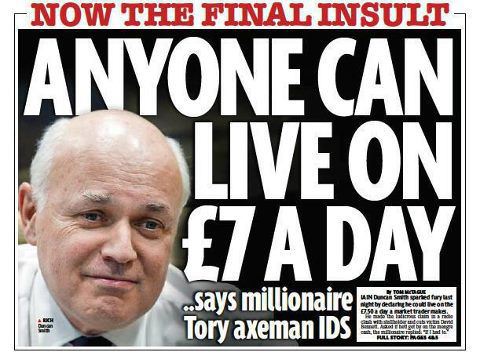
This campaign that most of us have bought into is very clever. We accuse those relying on the state security net as the scum of the earth. Is this an opinion that we actually have, are we really all-hateful people deep down inside? Or are those responsible using scapegoating of those vulnerable to distract us from the truth. Here is something I want you to see, which might actually shock you if you weren’t enlightened in the skullduggery of companies like Starbucks who make your favourite frapu-choco-caramelino lattes (if that’s even a thing).

Screen-shot-2013-10-11-at-13.46.54

I think I have said enough but just to summarise. You have worked out by now that I hate banks and the whole culture of greed that exists especially in the City of London. I don’t care that they make a lot of money for the country, that money never seems to trickle down to those who truly need it. Virtually no banker went to jail for these crimes, which have cost us, the public, so much. When the people do eventually rise up they get crushed, and then to make matters worse we get fooled into turning against those who had no connection with this financial fraud. Crazy. I want to finish off this post with a question for you to reflect on.

Should banks be allowed to get away with this?