
Just a little intro…
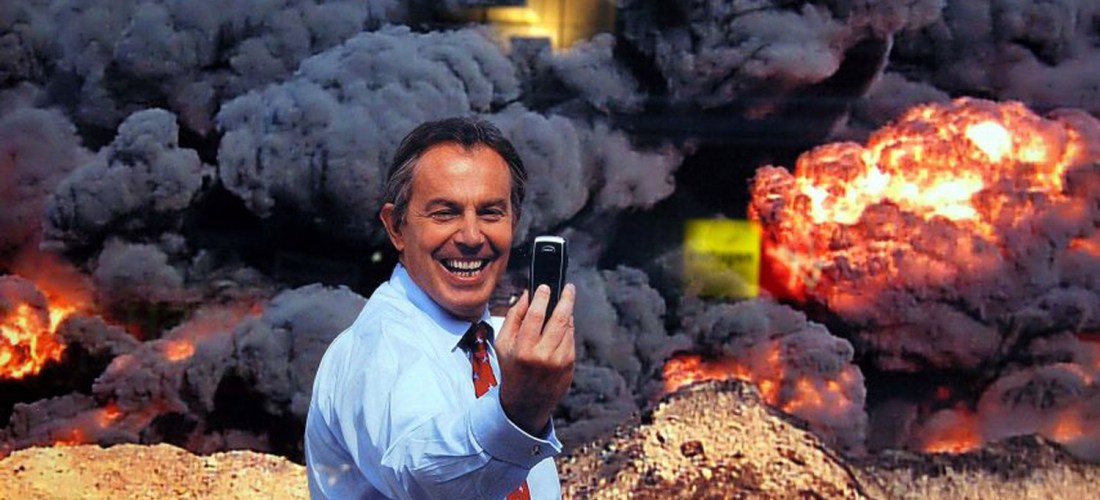
Juggernaut is a strong adjective to use for most things let alone a politician, so when I use it to describe Tony Blair please understand how truly exceptional this guy is- note that exceptional doesn’t imply that he was a good guy or a prick, that part is up to you to decide for yourselves. One thing that is fact though is the impact that the Iraq war had on not only his career and the public perception of him but the whole UK and its future.
I’m not ashamed to proclaim he is an idol of mine, I mean just look at this stuff;
- Manages to wipe the floor with a dominant Conservative party
- A whole class of social reforms, infrastructure investment and education reforms
- The big one for me- puts a stop to genocide in Kosovo
For a long while I tried to detach him from guilt in the Iraq war and blamed vested American interests, however I really am starting to question him these days. How stupid do you have to be to be friends with George Bush? Let alone follow him into a random war.
But lets not bore you with that. The following essay tries to find out whether realist interests were the motive for the Iraq war, or whether the personality of a leader (in this case Tony Blair) can be so strong and powerful that a war can be started at the whim of their finger. A few people sometimes complain that I never include sources in this blog and I was going to tell them to fuck off but maybe a better compromise would be to include some sauces this time (sorry), congratulations geeks- you win this round.
I hope you enjoy it, make yourself a coffee or ice tea or something beforehand because it’s quite a long read but who knows maybe its worth it- it could change your life and all that philosophical shit. Message me for any thoughts or good discussions, I love conversing (if you’re annoying don’t bother)
Have fun
Evaluations of the Iraq War and its merits have been bleak to say the least after its conclusion in 2011. Although there exists particular interest in exploring the legality of such a conflict, this paper will not delve into that minefield. Instead the process and motivations driving the decision to wage war against the sovereign state of Iraq shall be analysed. Significant emphasis is now placed on the belief that Iraq was a culmination in securing cold hard realist interests mainly by America. However, this argument does not satisfy my cravings for unquestionable closure, therefore the psychological aspect of key decision makers needs to be inspected. With Iraq there were a lot of public figures, so for the sake of being concise I will concentrate mainly on Tony Blair, whilst also acknowledging the entirely valid explanations realism provides for the conflict. This question is important for the field of foreign policy due to the ramifications it poses, is the practice of state’s foreign policy a result of consensus in a homogenous state or actually can it be hijacked by an opinionated and powerful individual.
The Return of Realism
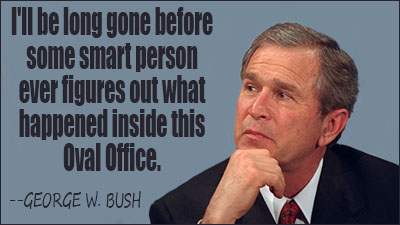
As known, the theory of realism continuously provides us with an explanation for global events throughout history based on its tenets of groupism, egoism and the central importance of power. When George Bush defeated Al Gore to bring the Republicans to the helm of US politics there was clearly going to be a shift in approach. The new president had set the tone that the presidency would be “a clear eyed realist” institution (Bush, 1999). This proclamation would continue to set the approach and stance that the new administration would take on foreign policy matters in Iraq. Later on in 2002 in the run up to the war the hints of intervention and the importance of realist thinking would be ushered by the president; “It’s important to have people in the Senate who are clear-eyed realists. It’s important to have people who see the world the way it is, not the way we hope it is, and the world is a dangerous place, particularly with people like Saddam Hussein in power (Bush, Iraq Must Disarm Says President in South Dakota Speech, 2002). This shows us the pre-invasion mood surrounding the top brass at the White House was very interventionist in the first place. Upon further exploration, the realism in the White House becomes much clearer as important members of the administration team like Dick Cheney and Condoleezza Rice are renowned advocates of realist politics (Boot, 2002, p. 23).
Exploring the Realist In-Group
Before exploring who constituted the inner group in the Bush administration there needs to be some context. In 1997 whilst the Democrats were still in power under the leadership of President Clinton a group of republicans gave birth to the “Project for the New American Century”. What this essentially was is a group of realists whose goals would be identical to the ones the Bush administration delivered on. They essentially promoted “American values” as if it was an exportable commodity (Boot, 2002, p. 12). The spread of Americanism throughout the world coupled with military strength would ensure the country the centre stage as the new hegemon. Of course this newfound ideology would require high defence spending, and more importantly the will to challenge regimes that posed a threat and deviated from the American way of thinking and against her interests (Boot, 2002, p. 25).
Now a realist undertone for US foreign policy is not something that came about exclusively with the Bush administration; in the 1980’s President Reagan also supported interventionism by the US abroad. The desire to project military power abroad became a key policy objective at the time, even in the midst of heightened Cold War tensions with the USSR (Agnew, 2003, p. 873). We can see then that Bush brought back this hard-nosed approach to international relations, but it was definitely not a novel approach- it had been done before, and it’s seeds were certainly sown before he came to power.
Foreign policy strategy was to be eternally changed by the events of the twin-tower bombings in September 2001. The opportunity arose for Bush to implement the far-reaching global interventionism that his inner circle believed in before they came to power. The fact with waging wars is that there has to be the right mood amongst the people, there has to be a consensus amongst them that this is the right thing and only option available. This view particularly hindered Blair in the UK where there was very strong opposition to the war, including the march of a million civilians (Naughtie, 2004, p. 134). The general feeling in America was akin to that after the Pearl Harbour attacks; the president could advocate a form of defensive realism, as means of protection- attack is the best form of defence. This was strange when compared to Bosnia a few years back, moves to go in there were blocked by Congress and people were reluctant to commit, yet after 911 the President was given a blank card essentially to do whatever it took (Boyle, 2004, p. 91).
The attacks on New York from a realist perspective were useful. They certainly created the domestic fervour at home to make the expansion of Americanism possible. The post-911 world has certainly allowed the USA to furthermore spread its values and ideas to a world, which in turn is now micromanaged under a unipolar superpower. Although some may critique this as a promotion of conspiracy theories, the fact that American interests have been served due to the war on terror is undeniable.
No more Communism? Great! We can do whatever tf we want now…
The balance of power created under the bi-polarity of the Cold War obviously ended when the Soviet Union demised. It could be said that the US did not take advantage of its status as sole superpower; maybe it did not know how to react after being constrained for so long (Agnew, 2003, p. 874). Yet the Bush administration arguably finally took advantage of the lack of buffer and committed to an offensive form of realism in the post-911 era (Agnew, 2003, p. 876). The existence of the USSR prevented the USA from engaging itself abroad in military interventions due to the complicated nature whereby allies in Europe relied on the US for protection essentially and any negative involvement would isolate them (Agnew, 2003, p. 873).
The shift in approach to be more assertive saw signs even in 1992; just after the collapse of the Eastern Bloc, there was apprehension that the US had to act fairly quickly in order to secure its new found superiority before it was challenged once more, it felt that its time was ticking until a new superpower emerged (New York Times, 1992). ‘‘Our first objective is to prevent the re-emergence of a new rival, either on the territory of the former Soviet Union or elsewhere, that poses a threat . . .. Our strategy must now refocus on precluding the emergence of any potential future global competitor’’ (New York Times, 1992). This infers quite clearly the aim of the United States as a state to secure its position in the world, and to become more secure- therefore taking up the realist position in the post-911 world cannot be attributed solely to the Bush administration but is reminiscent of a classic realist agenda in general. As mentioned previously, the big expansionist drive simply could not happen in the 1990’s due to the fact that the realists were not actually in power but rather the Democrats, and secondly there had not been a large-scale attack on the US in order for the people’s attitudes to be primed.
In summary, 9/11 was the enabler for the realist ambitions the US already had; it allowed the realists within the presidency to capitalise in order to carry out their objectives. These aims centred around two main points. Firstly the lack of a threat from ‘the other’, which used to be the Communists; America used the war on terror to re-impose itself as the unchallenged leader of the ‘free world’. It needed to remind the allies in Europe and the world of its credentials. Secondly the invasion would be a reminder to any potential rebellions against the established international system or American interests- basically if you offend us you will suffer the same fate (Agnew, 2003, p. 876). We can see that the original Afghan war was an act of self-defence, and in the view of international law it was certainly legitimised. The issue arises with the Iraq invasion which nearly ruptured the allies amongst themselves and has led to continued accusations of illegitimacy, yet the realists sent out the clear message that with unrestrained checks on their power they will be acting unilaterally if they have to (Agnew, 2003, p. 877).
Tony Blair and his personality
The declassification of information surrounding Iraq allows us now after it’s official conclusion in 2011, to gain a truer understanding of the buildup to the war. This is even more significant since this exact process of decision-making has been seen in many sectors of opinion as rushed, wrong and even illegal (Kampfner, 2004, p. 4). The personal views of Tony Blair in regards to what British foreign policy should aim to achieve should be assessed. He himself can be quoted as saying “the most pressing foreign policy problem we face is to identify the circumstances in which we should get actively involved in other peoples conflicts” (Blair, 1999). This speech early in his role as prime minister can arguably be seen as him presenting the foreign policy strategy the UK government will employ whilst he is at the helm. The main line of argument for Blair who we have now established an advocate of interventionism; is that the sanctity of state sovereignty is directly dependent on that state’s provision of protection for its people. Once a state decides to go as far as destroying its own population then the grounds for a moral intervention are entirely satisfied. According to Meyer, those in power applied this concept of moral interventionism to the Iraq case of 2003 whole-heartedly in their efforts to legitimize regime change and invasion (Meyer, 2005).
Everyone needs self-belief…except Tony Blair, he has too much already!
Those close to Blair have repeatedly and consistently brought up the fact that Tony Blair has enormous self-belief and trust in his charisma, thus also his ability to persuade others. He was always of the opinion throughout the whole build up to the war that he could turn things in his favour, just by the use of his own persona. He was convinced that he could persuade George Bush to seek approval from the United Nations, get the British parliament to approve his plan and most importantly get the British people convinced that he was telling the truth and such a move was actually needed (Kampfner, 2004). Tony Blair always backs himself even against the odds, believing that he will be the one to persuade the un-persuadable, he would claim “I can get Jacques Chirac to do this’’ or ‘‘leave Putin to me’’ (Kampfner, 2004, p. 127). However, Kampfner does admit that such bold belief by Blair tends to create scenarios of over reaching, where he bites off more than he can chew- suggesting that Iraq was one of these situations, and that Blair did not understand that “the world was more complicated” than he personally thought (Kampfner, 2004, p. 128).
This inability to understand complex matters for what they are, rather than seeing them in stark black and white was also noted by one of Blair’s advisors who commented; “I was staggered at Blair’s . . . inability to engage with the complexities. For him, it seemed to be highly personal: an evil Saddam versus Blair–Bush. He didn’t seem to have a perception of Iraq as a complex country” (Naughtie, 2004, p. 62). Naughtie also highlights Blair as someone who had a weird craving for informality in politics, a sort of make it up as you go along approach to facts and figures, and finally a tendency to block out the weighing up of evidence that he personally didn’t agree with (Naughtie, 2004, pp. 14,17).
From our perspective, this certainly does go far to an extent in explaining why Blair decided to view Iraqi WMD intelligence as unchallengeable, when in fact the independent Butler report suggested it to be sporadic and patchy in its evidence. If we can lay the reason for going to war on reports that Iraq possessed special weapons, then Blair can be found to be a catalyst for ‘strengthening’ it beyond doubt. He used his power to manipulate the evidence to suit his needs, without Blair it can be argued that the intelligence would have prevented the invasion of Iraq. He claimed ‘‘what I believe the assessed intelligence has established beyond doubt is that Saddam has continued to produce chemical and biological weapons, that he continues in his efforts to develop nuclear weapons, and that he has been able to extend the range of his ballistic missile program . . . I am in no doubt that the threat is serious and current, that he has made progress on WMD, and that he has to be stopped’’ (Blair, Foreword to Iraq’s Weapons of Mass Destruction: The Assessment of the British Government, 2003). He used his agenda of wanting the war, in the process tampering in a sense with evidence thus can be held responsible for going to war.
Tony Blair’s interventionist belief perhaps was driven by his desire to maintain the special relationship with America. Many at the time felt that Blair was almost like the puppy of George Bush, and that he should actually abandon this loyalty, yet his response to these calls were as follows; ‘‘I will tell you that we must stand close to America. If we don’t, we will lose our influence to shape what they do’’ (Seldon , 2004, p. 574). This obsession to shape American policy blind sighted Blair in a way, his self-belief that he could achieve something like that actually wasn’t achieved, and instead critics state that all this was in vain. He could not persuade Bush and the Americans in any way, shape or form. This all ties back to the change in approach in regards to the conduct of foreign policy under the premiership of Tony Blair. A more personal approach was taken to the way foreign affairs were conducted, personalising it to an extent and actually bringing it into the domain of prime ministerial responsibility rather than a separate department under the foreign secretaries prerogative. His domination of the foreign department was so total that a former advisor described it as “Napoleonic” (Hennessey, 2001, p. 478). The bypassing of Jack Straw who was foreign secretary at the time was admitted by himself too; ‘‘There is a recognition that if there is an international crisis on this scale the head of the government will be leading the national effort, and he had sure better be’’ (Straw, 2001, p. 1). Although Jack Straw does not explicitly shout about Blair meddling in his affairs, we can sense the general idea of what he is saying. We can infer from this statement that Blair led the foreign policy charge personally and thus foreign actions like Iraq would be due to decisions made by him.
The role played by those in the so called ‘inner circle’
I will be looking at the role of Blair’s persona, in particular his preference for conducting policy decisions and formulation within an in-group of close advisors instead of open deliberation with a variance in opinion such as those in the cabinet (Guha, 2003). Now aside from the aforementioned issue of there being little in the way of challenges to his opinion and real reflection, this also creates a situation whereby cabinet is used as a mechanism to simply validate plans which had already been agreed in advance. This created a very informal style of governorship, and left a disarrayed cabinet starved of information, they would end up finding things out through mainstream media before they heard from within (Naughtie, 2004, p. 45). This all then just infers what we already suspected, that the decisions taken were led by Tony Blair as a personality rather than the deliberations of a cabinet, so the responsibility for them should be left at his feet.
The importance that Tony Blair had in the Iraq war cannot be argued with, in terms of how he drove forward UK foreign policy decision making at the time. Blair reigned supreme in regards to having unchallenged control over the affairs of the UK in this time period; this made it much easier for him to spread the ideals he held dear through interventions in the world. Saddam Hussein was not challenged as vehemently before the arrival of Blair onto the scene, although he was denounced there wasn’t a pressing need to intervene. However Tony Blair made it a foreign policy priority, seeing himself as a global policeman. The fact that he had all of the power we talked about meant that he is personally responsible for the Iraq situation. Normally you could also attribute blame to the government as a whole, but the evidence really does support the view that he ran a crony system whereby the cabinet were not involved in debate but merely the validation of pre-prepared policy ideas. During his tenure the foreign policy lost it’s purpose under the jack-of-all-trades Blair.
Lets wrap things up here because I’m getting tired and want to go to the café
To conclude on the question of essentially what led to the Iraq war we can see two clear strands of thought. The first focuses on the classic tenets of realism, mainly being about states acting for accumulation of power and the assumption that these states are single-mindedly homogenous entities. On the other hand, the role of leader psychology can be seen as also having an effect. The contribution that Tony Blair made to the Iraq war does seem very important, he was the main and unquestioned driver of UK foreign policy at the time; and the fact that the prime-minister post with a strong majority is a virtual dictatorship also supports the point. The realist argument I feel falls down on cold hard facts, its biggest flaw is the assumption it has of states themselves, states are not homogenous but rather an aggregate of individuals with different ideals. In addition to this, as mentioned early on in the paper, we did see murmurings after the end of the Cold War that expansionism should take centre stage, yet it was only after Bush came to power that this actually happened. If realism is right, and states are always out there waiting for their rivals to slip so they can accumulate more power then the Iraq invasion would have happened ten years before it did. The role of personality plays the biggest role, and it certainly did in Iraq with Blair. We have the assumption that one individual could be too small to affect the policy of their massive states, yet the evidence proves that it only took two individuals to send us into a war we now realise we didn’t want.
Top Tips from Bazi: Tony Blair, if you’re reading this here is a tip for next time…
……if you want to start a war with your mates then at least give us accurate reasons BEFOREHAND and stick to your reasoning. Don’t go in on the pretences of there being Weapons of Mass Destruction in Iraq just because scaring the British brings them on board better than other reasons for supporting your desire for war. After you realised there weren’t any weapons you tried to frame Iraq as a Western humanitarian intervention. I can accept humanitarian intervention wars to save people, but you have to give that reason beforehand not after.
Cheers for taking the time to read, I’d love to hear your thoughts


Bibliography
Agnew, J. (2003). American Hegemony into American Empire? Lessons from the Invasion of Iraq. Antipode (35), 871-885.
Bush, G. (1999, November 21). A Distinct American Internationalism . A Distinct American Internationalism . Simi Valley, California, USA: Reagan National Library .
Bush, G. (2002, November 05). Iraq Must Disarm Says President in South Dakota Speech. Speech on Iraq, given to Congress . South Dakota, n/a, USA: White House Press release.
Blair, T. (1999, April 22). Doctrine of the International Community. Speech to the Economic Club of Chicago . Chicago, USA: Economic Club of Chicago .
Blair, T. (2003). Foreword to Iraq’s Weapons of Mass Destruction: The Assessment of the British Government. London: Stationary Office .
Boyle, M. (2004). Utopianism and the Bush Foreign Policy. Cambridge Review of International Affairs (71), 81-103.
Boot, M. (2002). The Savage Wars of Peace: Small Wars and the Rise of American Power. New York: Basic Books.
Guha, K. (2003). Testing Times for Prime Minister’s Inner Circle. London: Financial Times.
Hennessey, P. (2001). The Prime Minister: The Office and its Holders Since 1945. London: Palgrave.
Kampfner, J. (2004). Blair’s War. London: Simon & Schuster .
Naughtie, J. (2004). The Accidental American: Tony Blair and the Presidency . New York: Public Affairs .
New York Times. (1992, March 8). Prevent the Re-Emergence of a New Rival. Excerpts from Pentagon’s Plan . New York, NY State, US: New York Times .
Meyer, C. (2005). Playing to the Crowd. London: The Guaridan.
Seldon , A. (2004). Blair. London: Free Press.
Straw, J. (2001, November 6). Interview with the Foreign Secretary . (B. Webster, R. Webster, & P. Webster, Interviewers) The Times. London.
 Plain Politik