
The best part of election day has to no doubt be the realisation that there will no longer be any more campaigning and television programming can finally return to normal (thank God for Eastenders). How this election came about in the first place was quite weird, but also understandable. The majority of 17 seats the Conservatives had in parliament meant a lot of power lay in the hands of backbench MPs not in government; if they wanted to rebel then they could. Like most interest driven politicians these, backbenchers did cause trouble; those who had wanted more say on Brexit slowly dragged government plans down, so something had to be done.
Consequently, at this time the high poll ratings for Theresa May were tempting her into staging an election, however the upcoming Brexit negotiations surely meant she should forget it and get on with the job? Nope, our old friends in government decide this is the perfect time to piss us off by forcing us to vote and thus further delay the start of negotiations. Let us not forget that most trade deals take 10years+ to be negotiated- we only have two for ours with the EU, well actually now we have less than two because people cannot actually be bothered to start the negotiations. I don’t blame her for staging an election because I can understand that everything pointed towards a Tory landslide but sometimes you have to put national interest ahead of political point scoring; in 2010 Nick Clegg did just that, he could have refused to prop up a government and thus not risk anything but he chose to create relative stability in a time of recession and global financial crisis- even if the tuition fee fiasco still hit.
I should move on and assess the many reasons I think can explain the hung parliament and why the Conservatives have lost the most in this election, notice how I don’t say Labour have won. There seems to be this over joyous perception amongst people post-election that somehow Corbyn has won a landslide and all is rosy. We can go through the different election factors in a minute, but Labour are still the second party and have many less seats, to be a majority government they have a lot to improve on. The reason we’re seeing a ‘de-facto Labour win is because they did okay when actually everyone expected them to be run over’ – sorry but gaining a similar amount of support to what Gordon Brown managed in 2010 is nothing to celebrate.
UKIP Vote
Yes! My favourite topic re-emerges again. There is nothing more that I love in the world than working class people voting for a party that does not actually help them in any way, shape or form. Jokes aside, everyone has their reasons for voting UKIP be it based on inherent racism or as a protest against traditional political parties. The Brexit vote which was won by the Leave camp in a way meant that although UKIP had won then, they ended up losing in the recent election this time round. The relevance of the party diminished for two reasons. First, the whole DNA of UKIP has been about separation from the EU since its inception, and now Brexit has essentially made them a pointless proposition altogether. Second, the Conservative promises that free movement of people was the ultimate red line in negotiations thus signalling towards a ‘hard Brexit’ meant that Leave voters did not feel as compelled to continue voting for the extreme right party.
So what happens to the millions of voters they had in 2015? Well, if you asked a politics professor they would probably have given you the answer that most UKIP voters were right wingers and thus would return to the Conservative party, and this idea does essentially make sense. Yet, Brexit was weird, a lot of traditional Labour supporters had actually been both Leave and UKIP voters. We see then a splitting of the previous UKIP vote amongst Labour and the Conservative parties at this election; this was though a disproportionate distribution whereby Labour got more of the spoils than the Tories- further increasing their vote share in crucial constituencies.
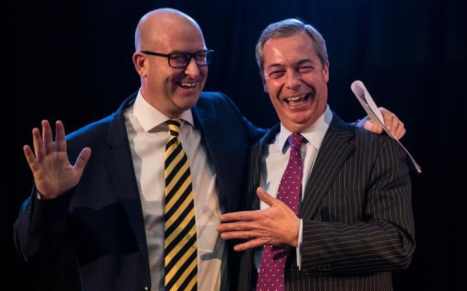
As a side note though, I stayed up all night watching the election coverage on BBC One. At one point around 3am or so, Nigel Farage comes on like a shrivelled potato and explains how he’ll ‘be forced’ to come back into frontline politics. I don’t care about this guy any more, but the fact that he keeps fake resigning and then comes back is the most annoying shit ever. Don’t sit there and try to forward this false ‘national saviour’ narrative, when you’re gone I want you to shut up and actually go. It also says a lot how UKIP is a personal party in that it cannot survive without the aura of its leader, I admit he is charismatic and a good leader however but come on UKIP get your act together and get a grip. Grow up.
SNP Lose
I don’t want to go too deep into this, to be perfectly honest I do not know much about Scottish politics so would feel like I’m giving a false impression of expertise. The SNP in a similar way to UKIP won their appeal off the back of a rise in national sentiment because of the 2013 vote for Scottish independence. Although eventually Scotland voted to stay in the union, the SNP completely wiped out everyone in Scotland and returned as the third biggest party in Westminster. The huge support galvanised key figures like Alex Salmond and Nicola Sturgeon and gave them the mandate to start demanding a second referendum on independence.
The mistake probably lies here, in the SNP’s ignorance of the unionist voters. Yes of course they had the relevant mandate for their demands from the election landslide in 2015, but a lot of voters who opted to remain in the union in 2013 probably felt abandoned and unheard as the SNP drove on for an indyref2. Scotland of course was a Labour fortress previously and thus in this election a lot of those disillusioned with the SNP went back the newly left-wing Labour which had retouched its socialist values.
What confuses me though is why the Tories did well in Scotland, a possible explanation could be the ‘left vote’ was split between multiple parties and thus it allowed the Tories to sneak through. Still it perplexes me, I’d love to hear your opinions on this too.
Labour Youth Mobilisation
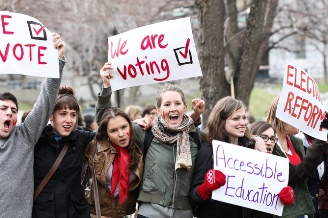
I’ve always been a democrat first and foremost and confidence in the democratic system has waned in the last few decades. We’ve had a growing trend of people claiming that ‘voting doesn’t matter’ or ‘nothing will ever change’. Especially among young people this seemed to be the case. What this does is allow other age groups to essentially dictate votes and then also policy. Youth voters cannot sit there complaining that politicians are screwing them over when their age group turnout is so historically low. Older citizens consistently go out and vote, so naturally parties will cater their manifesto ideas for them to win these voters over- it is not rocket science. If you want politics to cater to your needs, then worthwhile participation is key.
Along came the Brexit vote and once again it emerged that the UK could have remained in the EU if more IN leaning young voters had bothered to go and vote. What we saw was not an acceptance of the vote, but anger directed towards the older generation for voting the way they did, and also an annoyance with the system because it would actually for once deliver what the country had voted for and leave the EU. For me voting is second nature and I don’t have to be convinced, but I’ve been sitting wondering how other young people can get out of this hopeless rut and get out there, a little inspiration it seems it just what they needed to push on.
The parliamentary Labour party were completely against Jeremy Corbyn, they had very strong doubts in his leadership capabilities yet even after Brexit the party members gave him an even larger mandate to lead with. Throughout the election we saw the Conservatives running a very personalised campaign centred around the perceived message that Theresa May was a strong and stable leader, out of choice they strategised on this and hoped that the public would see Corbyn as weak. Labour also to some degree ran a personal campaign whereby only Jeremy and a few close figures featured prominently- yet they were forced into this by the rest of the party not wanting to align themselves closely because the pre-election polls did not look good. Jeremy was running in minus figures nationally and Labour expected heavy losses, these MPs hoped that any association to him could be avoided and they could keep their seats. In the end of course this all proved to be wrong, and actually a large proportion of them should get on national television and apologise to him personally for their cowardice and self-interest seeking un-loyal behaviour.
Corbyn managed to prove so many people wrong, it turns out he has a huge ability to campaign, as the election grew closer he was blooming; people started understanding him as a man of principle and someone that inspired them with hope rather than the negative campaign the Tories were running- just today I saw a figure claiming the Tories spent over £1m of funds on anti-Corbyn advertising, yet it clearly did not work well enough. The youth in particular for the first time in a generation felt inspired to vote rather than forced to. A large part of this has to be down to the way Jeremy presented himself as a man of his word, his voting record through the years as an MP has been led by principles first- something never seen before in previous career politicians.
The power of the manifesto though cannot be discounted either. The Conservative manifesto it has emerged was designed by a close knit team of close Tory advisers without much input from anybody else. It did not have as many groundbreaking ideas as the Labour manifesto, even if theirs was actually more of an idealistic wish list. The Labour manifesto can be argued as unrealistic and the way in which they would pay for their promises was brought into disrepute- but at least they offered something for everyone. Labour won votes from all spectrums, the previously Tory older generation started to warm to a Labour party promising to protect their un means-tested winter fuel allowance, and also the triple lock for pensions.
Conservatives were bad
Where Labour put an arm out to the older generation the Tories did as much as they could to alienate them. They didn’t promise a triple lock, they considered means testing for the fuel allowance (which personally I am actually in favour of, under the current system even millionaire retirees can still claim their winter fuel allowance the same way that those struggling to heat their homes can).
The worst Tory blunder though came under their promised reforms for social care. What came to be known as a ‘dementia tax’ forced Theresa May to make a U-turn and thus harm any perception that she was a strong leader. Asking a retired population who feel they have worked hard all their lives to then give up their life capital and only be allowed to keep £100,000 meant their loyalties to the Tories stopped. I honestly couldn’t believe my eyes when I saw the social policy coming through, I knew something was wrong and I was right; the lack of proper party scrutiny hadn’t corrected this policy and stopped it from going into the manifesto due to the lack of trust the prime-minister had in the party mechanisms and the over-reliance on a few close advisers she had had since her days in the home office.
You will remember me talking about the Tories leading a highly personalised campaign because of the belief that people would be put off by Jeremy Corbyn’s perceived lack of leadership authority and see Theresa as more ‘prime ministerial’. Upon the start of the respective campaigns this definitely was true as pointed out in the polls, he ran in negative figures and she was miles ahead in percentage points. Yet, it became clear as the weeks went by that Jeremy was taking to campaigning like a fish to water, he literally blew apart every assumption we had made, the people were warming to him and his principles. How far this rise in popularity was just due to him can be debated furthermore, was he really good or was she just shit? The answer is probably a bit of both actually, we definitely shouldn’t underestimate how bad she became though. Theresa May started to sound like a robot, with her psychotic ‘strong and stable’ soundbites that the rest of the party had to repeat like an army of drones. She wasn’t meeting real people only stop offs surrounded by party supporters faking the extent of ‘crowds’. The worst though came when she decided not to join the leadership debates, yes of course you can argue every other person in her position would have shied away too, Cameron for example didn’t go on direct head to head debated in 2015 either, but his popularity wasn’t waning like hers, she desperately needed to rekindle a deeper connection with the electorate- and instead of this her no-show just made the divide bigger as we started to feel offended by her unwillingness to respect us and continued behaviour where she took votes for granted.
Another thing taken for granted was the UKIP vote, the Tories like everyone else believed most UKIP voters were former Tories who were a bit fed up but now we were going to have a hard Brexit they would surely come back like chickens to roost. To be fair the Tories since Brexit have been stuck between a rock and hard place. They have had to give us Brexit and so forced into alienating themselves from the 48% remain voters. Labour and other parties on the other hand could play the field. In the case of Labour, in the manifesto they also made it clear that Brexit would mean an end to uncontrolled immigration (same as the Tories) but in terms of rhetoric they had a free hand to go and convince the remain voters that they were somehow different from the un-compassionate Tory monsters out to get the hardest divorce from the EU available. Through force and choice, I don’t think I remember a political campaign as bad as this for the Tories, and if Labour had had an even more likeable leader who could reach out to Tory voters then we could have been looking at a spectacular jugular attack and leftist landslide. As the old saying goes though; fuck knows.
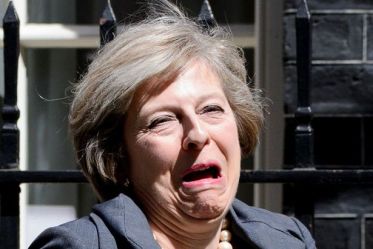
What now?
Now you’re reading this and expecting some sort of clarity from a guy who has become so shit at predictions that he nearly had to close the blog down a few months ago for various reasons, but I don’t want to let you down so I’ll try my best. You know what I might actually use bullet points here to try and trick your brain into thinking there isn’t going to be a lot of text, when actually there is.
- We have a hostage situation essentially, not like the ones in films where fit girls are taken by an evil anti-hero and Superman has to save these damsels in distress in an overcomplicated set of CGI filled scenes. What we actually have is a prime-minister sitting in number 10 with a minority government. We’ll go onto the DUP problem later. Remainers are going over the top right now with their celebrations, they think a sitting duck premier will mean that we might not have Brexit at all. Yes, overriding a democratic decision made by the people will definitely increase confidence in the democratic process, I’m sure this would help the average man think ‘my vote really matters’. Obviously it won’t, stop trying to frustrate something we all voted on and let’s get on with it and make the best of it. May might be more prone to working together with other parties in Westminster so you could get some of her previous red lines wiped away, immigration was seen as a redline previously and the desire to have access to the free market was secondary but now they might have to be on equal terms. Remember though, she is also now more susceptible to her own backbench MPs too, all it takes is a few of them to not follow the party line and the government is defeated…the government struggled at times last year with a majority of 17, now in a minority government it cannot expect to be stronger and get its way.
- The Democratic Unionist Party are from Northern Ireland, which of course is a pressure-cooker region ready to explode if you mess around with the various sensitivities too much, you can’t take peace in Northern Ireland as John Major said today “for granted”. Now, traditionally since the Good Friday Agreement which ended the Troubles the UK government has acted as an impartial peace mediator in power sharing coalitions, last year the government broke down there between Sinn Fein and the DUP. If the DUP get into government with the Tories, how can the government then realistically be an impartial power broker? It can’t.
- This point centres more on who the DUP actually are themselves and what they believe in. The government will be propped up by a group of MPs who have a history of outdated views. I can’t fathom how you can be against abortion in this age and also not believe in climate change, yet I guess that’s religion for ya. It’s not just the weird views they hold though, there is a technical political aspect we can look at too. A deal with this party will of course mean some leverage is given away, they will likely demand more funds for public services in Northern Ireland- leaving other UK regions to wonder why Northern Ireland can bear the brunt of austerity less than the rest of us. If we are truly ‘all in it together’ then why are they getting away scot-free.
- For now, Brexit doesn’t seem to be under crisis, it is under threat but not as bad as it may seem. The government have insisted talks will be underway next week under the original date so that is good, how successful they’ll be is anyone’s guess though. The bigger problem might happen in the summer when there is a parliamentary recess and everyone shoots off on holiday. No-one has predicted Theresa May to still be prime minister after 6months, and I figure that the party is looking for her to steady the ship and then bring in a new leader. The Tories have always had a knack for not giving a shit and being ruthless, even their ideological wife Margaret Thatcher got the boot this way. This could be the time for Boris Johnson to make his long awaited leadership bid, something he chickened out of after Brexit, but don’t discount other people too- the party is full of talent ready to come to the fore and make a name for themselves.
- Finally, what happens with Labour? Before the election we had MPs trying to get as much distance as possible between themselves and Jeremy Corbyn for fear that he is a magnet of electorate distrust. Yet now, the election surely has proved otherwise, will they come back and get on board the bandwagon thus giving him a much more united party he can shift around through its various mechanisms. I certainly hope so, even if they do not agree with him I feel that they owe him loyalty to some extent for being a catalyst in them keeping their seats and even winning new ones. Plus, the last thing Labour can afford to do is start more infighting whilst the Tories are such an easy target- if that is they have plans to get into government.
- I’ve fallen in love. Seeing so many young people on social media getting involved in politics has been a breath of fresh air, even though some of you have been pissing me off with your partisan views and the way you make politics personal. Stop attacking people personally all the time online, whether they’re Tory, Labour or whatever else, by all means attack their opinions but not their person. This point proves a shift, in the past the old mantra dictated something like ‘whoever had the support of The Sun would win the election’, traditionally the Tories had it but Tony Blair bucked the trend. Anyway, I’ve always been a firm believer in this, due to how impressionable Sun readers seem to be in following policies designed to fuck them up. Their problem, not mine. But anyway, this election has for the first time seen the growth in alternative media as a medium for informatics, the influence of traditional media is dropping, people no longer care about the headlines, and instead they’re going online to source their own information. We have to be careful with unregulated media, after all the spread of ‘fake news’ and unsubstantiated claims can go like wildfire but its looking positive at last. Rupert Murdoch you better start running.
Okay that’s where we stand right now then, British politics is filled with more drama than an episode of Big Brother but it could be a good thing in the long term. I’ll try and correct any grammar mistakes throughout but if any get through then don’t hate me, hope you enjoyed the read even if was a bit long but I’ve tried to make you laugh a little at least so it is worth it.
Yours truly,
G
 Plain Politik